Time flies when you’re chain-queuing ranked games, right? It’s 2026 now, and I still find myself going down the rabbit hole of old Dota 2 tournaments. Last night, while reorganizing my stash of digital memories (aka my 4 TB external drive filled with VODs), I stumbled upon the PGL Arlington Major 2022. Watching those games felt like finding a forgotten love letter from a chaotic ex – messy, exhilarating, and full of “what-ifs” that still make my heart race.
For anyone who wasn’t around back then, let me paint you a picture. The 2021/22 Dota Pro Circuit was a pressure cooker, and the Arlington Major was the last major stop before The International 2022. It wasn’t just a tournament; it was a high-stakes demolition derby where every single DPC point glittered like a tiny golden ticket to TI.
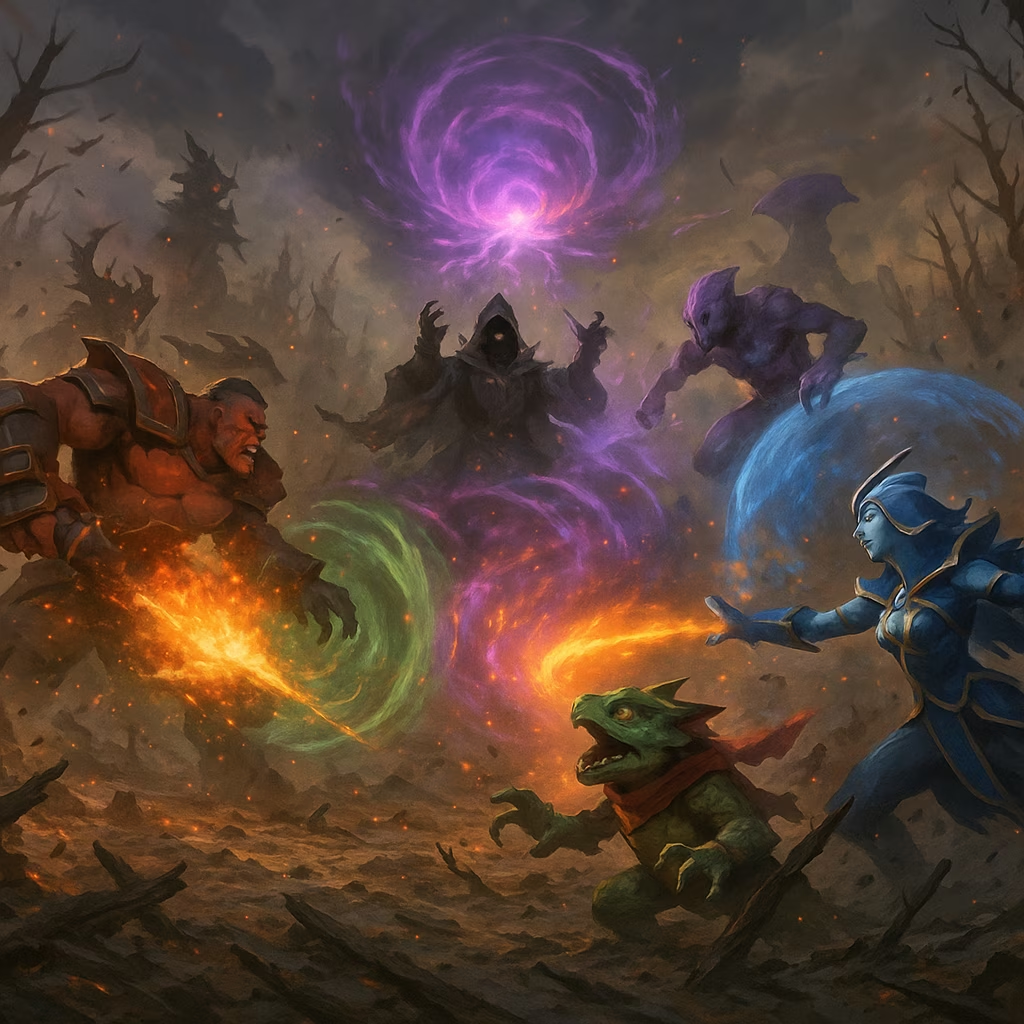
🌪️ A Storm of Visa Woes and Last-Minute Drama
The lead-up to the event was pure chaos, the kind that only Dota can deliver. Xtreme Gaming, one of China’s heavy hitters, abruptly pulled out. Their decision felt like voluntarily stepping off a speeding train because they already had a direct ticket to The International 2022 locked in. Meanwhile, Fnatic’s situation was more like showing up to a cooking competition with three substitute chefs who had never seen the recipe. Three of their starting players had their US visa applications denied, forcing them to scramble for stand-ins. I remember feeling a twisted cocktail of sympathy and morbid curiosity – could a team survive such a Frankenstein roster jumble? Spoiler: it was a rocky ride, but it added a raw underdog narrative that glued me to the screen.
📜 The Format Was a Brutal Dance on a Tightrope
The tournament structure was a marvel of competitive cruelty. Eighteen teams were split into two groups of nine, battling in a round-robin bloodbath of best-of-two matches. The top four from each group slid into the upper bracket playoffs, the 5th and 6th placers clung to the lower bracket like shipwreck survivors, and the bottom three were unceremoniously sent packing. Imagine qualifying for a festival’s VIP section through a labyrinth of booby traps – one shaky series and you’d tumble from champagne to cardboard-box camping.
Then came the playoffs: single-elimination, best-of-three, except for the grand finals. The upper bracket teams had a safety net – they could drop one series and still fight back from the lower bracket. It was like walking a tightrope over a canyon of shattered dreams; one slip in the lower bracket and you were just a spectator. That format didn’t just test skill, it stress-tested mental fortitude, turning every map into a psychological thriller.
💰 The Loot and the Glory
Prize pools in esports always stir the greedy little goblin in me. The Arlington Major boasted $500,000 total, with a crisp $200,000 and 820 crucial DPC points waiting for the champion. The runner-up still bagged a respectable $100,000 and 740 points. But honestly, the money was just the frosting. The real treasure was those DPC points – lifeblood for teams trying to secure their TI invite. Every match felt like gambling at a cosmic slot machine; win, and you’re showered in gold and plane tickets to the biggest stage. Lose, and you’re left staring at a blinking “insert coin” reminder of your shattered season.
🌍 The Global Parade of Titans
The team lineup read like a deck of legendary cards from every corner of the Dota universe:
-
🇨🇳 China: PSG.LGD, Royal Never Give Up, Team Aster (and Xtreme Gaming’s ghost lingering).
-
🇪🇺 Western Europe: OG (fresh off their Stockholm Major win), Team Liquid, Tundra Esports, Entity.
-
🏔️ Eastern Europe: Team Spirit (the TI10 champions!), Outsiders, Natus Vincere.
-
🌏 Southeast Asia: Fnatic and their substitute crew, along with BOOM Esports and Talon Esports.
-
🇺🇸 North America: Evil Geniuses, Quincy Crew.
-
🌎 South America: beastcoast, Thunder Awaken.
Group A was a nightmare blender. Fnatic’s patchwork squad had to face PSG.LGD, OG, and Team Liquid right away. Meanwhile, Group B hosted the reigning champions Spirit, a red-hot Tundra, and a determined beastcoast. Looking back from 2026, many of these rosters have completely transformed or disbanded, which makes this time capsule even more precious.
🕶️ Why This Major Still Haunts Me
Watching those games today, I’m struck by how much the meta has evolved, yet the raw emotion remains untouched. The crowd at Esports Stadium Arlington sold out instantly, and you could feel the rumbling energy through the stream – a sea of fans waving signs, their voices merging into a single heartbeat whenever a Divine Rapier was purchased or a mega creep comeback materialized.
The backpack storylines are what I cherish most. OG chasing a back-to-back championship felt like a madcap artist trying to paint a masterpiece while riding a unicycle. Tundra’s inventive drafts were puzzle boxes that opponents struggled to solve. And Team Spirit, the underdogs turned kings, had a massive target on their backs. Every single map was a novel, every series a saga.
✨ My Top Takeaways (Even in 2026)
-
Visa roulette remains the true final boss. Nothing has killed more hype than bureaucratic paper walls, and Arlington ’22 was a textbook example.
-
Single-elimination pressure breeds unforgettable moments. When there’s no tomorrow, teams play like they’re possessed, and we the viewers feast on the drama.
-
DPC points are the invisible currency that shapes all strategy. Some teams treated the Major as a playground; others treated it as a life raft. That dichotomy made every group stage bo2 feel like a playoff game.
If you have a free weekend, I urge you to dig up the PGL Arlington Major 2022 VODs. It’s not just nostalgia – it’s a masterclass in competitive storytelling, a reminder of why we fell in love with this chaotic, beautiful game. And if you, like me, still get goosebumps hearing the crowd roar as the ancient crumbles… well, you know you’re never really cured of the Dota fever. 𝙎𝙚𝙚 𝙮𝙤𝙪 𝙞𝙣 𝙩𝙝𝙚 𝙣𝙚𝙭𝙩 𝙦𝙪𝙚𝙪𝙚. 🎮✨