As I logged into Pokemon Unite today, I couldn't help but feel a familiar thrill mixed with a new sense of anticipation. It's 2026, and the game has come a long way since its launch. But the announcement that truly reshaped our battlefield, Theia Sky Ruins, still feels as fresh and impactful as when it first replaced the old Remoat Stadium. I remember the community buzzing with theories and excitement. Was this just a visual update, or were we in for a fundamental shift in how we play? The answer, as I've come to learn over countless matches, was a resounding yes.
Producer Masaaki Hoshino's words from the World Championship announcement echoed in my mind: "People want something new." And boy, did they deliver. The most immediate shock for veterans like myself wasn't just the floating islands and ancient architecture; it was the wild Pokemon. Remember how Remoat Stadium felt? If you weren't camping the central jungle, you were often left scrambling for scraps, especially in the top and bottom lanes. It created a meta where certain 'mons were practically unplayable unless they could jungle. But Theia Sky Ruins changed all that.
The Wild Pokemon Revolution
Hoshino promised more Wild Pokemon early on, and in the middle lane. This wasn't just a minor tweak; it was a liberation for laners. Suddenly, my favorite defenders and supporters could actually level up at a decent pace without having to risk overextending. The early game felt less like a desperate struggle for experience and more like a strategic skirmish. But what did this mean for team composition?
-
The Jungle Meta Shift: With more resources in the central area, the idea of a shared jungle between two teammates went from a risky gamble to a viable strategy. Could we see double-jungle compositions become standard?
-
Lane Viability: Pokemon that were once considered too slow or weak early game found new life. The meta expanded overnight.
-
Strategic Depth: The map layout itself, with its new paths and alcoves, meant that ganking and objective control required relearning. It wasn't just a reskin; it was a new chessboard.
The changes forced everyone, from casual players to pros, to rethink their entire approach. No longer was the game solely decided by who controlled the central corridor. Theia Sky Ruins distributed power across the map, making every role feel crucial from the first Aeos energy drop.
.jpg)
The Fall of a Titan: Zapdos vs. Rayquaza
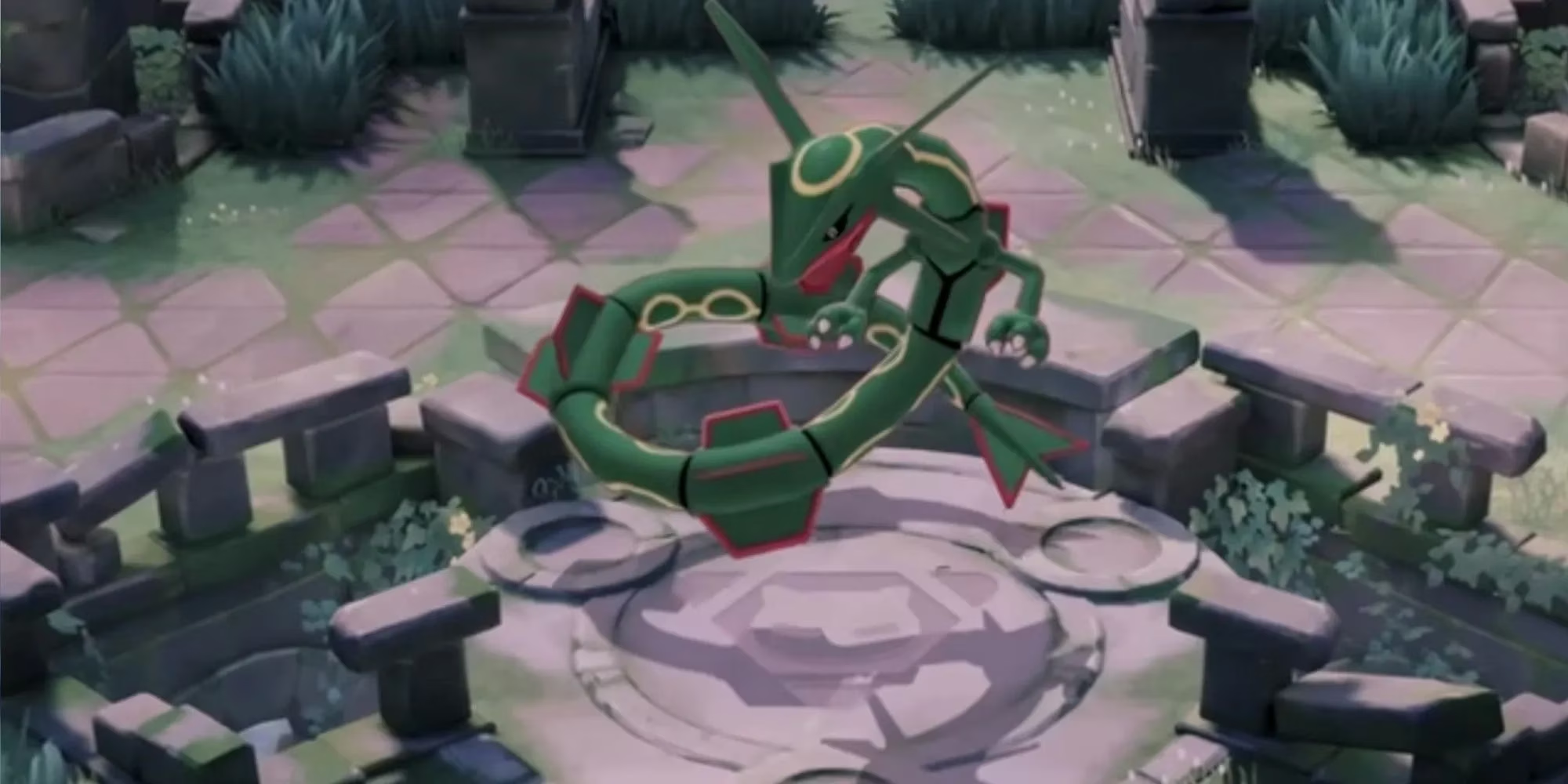
However, the single most dramatic change, the one that still defines clutch moments today, was the replacement of Zapdos with Rayquaza as the final boss. Ah, Zapdos. For years, that legendary bird was both a savior and a curse. How many matches felt utterly decided by a single, chaotic team fight in the pit during the final two minutes? In solo queue, it often felt like a coin flip—a moment that could invalidate 8 minutes of solid play. The community's love-hate relationship with Zapdos was legendary.
Rayquaza was the solution. Hoshino explained the new philosophy clearly: "It's more of a buff to the winning team than a debuff to the opposing team." Let's break down what that meant:
| Boss Mechanic | Zapdos (Old) | Rayquaza (New) |
|---|---|---|
| Primary Effect | Instantly stuns & disables ALL opposing goal zones. | Grants the defeating team the "Unite Rayquaza Buff." |
| Scoring Impact | Free, instant scoring on disabled goals. | Dramatically increased scoring speed. |
| Combat Impact | None directly. | Significant increase in Attack power. |
| Psychological Effect | Often felt hopeless for the losing team; encouraged "Hail Mary" steals. | Feels empowering for the winners but defendable for the losers. |
This shift was monumental. Beating Rayquaza gave your team a powerful tool: you could score blazingly fast and hit harder. But crucially, the opposing team's goals were still active. They could defend! They could intercept you! A Rayquaza steal no longer meant an automatic loss; it meant you had a fighting chance to defend your bases against a powered-up, but not invincible, opponent. The final two minutes transformed from a binary "get Zapdos or lose" scramble into a nuanced endgame phase with multiple strategic layers. Do we fight for Rayquaza? Do we try to score before they get it? Do we split push? The comeback mechanics felt earned, not random.
The Legacy and The Future
When Theia Sky Ruins launched, it completely replaced Remoat Stadium. For a while, it was the only map we knew for ranked and standard play. But as Hoshino hinted, the team was considering rotations. Fast forward to 2026, and we've seen that vision come to life. While Theia Sky Ruins remains the competitive cornerstone, occasional map events and rotations keep the gameplay fresh, much like the Quick Match modes always have.
Reflecting on it now, the introduction of Theia Sky Ruins was more than just a content update. It was a statement. It showed that the developers were listening to core community feedback about game balance, comeback mechanics, and strategic diversity. They addressed the frustration around Zapdos without removing the high-stakes, objective-focused climax that makes MOBAs so thrilling. They opened up the meta, allowing dozens more Pokemon to shine in the competitive spotlight.
So, when I drop into the Sky Ruins today, I'm not just playing on a new map. I'm playing in a refined, more strategic, and ultimately fairer version of the game I love. The floating ruins are a testament to the game's evolution—a place where every role matters, where the final showdown is a test of skill and strategy, not just luck, and where the mighty Rayquaza rules the sky, not with an instant win, but with the promise of an epic, hard-fought finale. Isn't that what competitive gaming is all about? 🎮✨