As I reflect on the electrifying spectacle of the 2026 Pokémon Unite World Championships in London, the memory of North American squad BLVKHVND's flawless conquest remains vivid. The team, composed of Junglebook, Slash, Kyriaos, Elo, and Overlord, didn't just win; they authored a masterclass in competitive strategy, sweeping through the world's top 13 teams to claim the inaugural world title and the $500,000 prize. Their journey from the winner's bracket to a decisive 3-0 shutout against Nouns Esports in the Grand Finals was a display of sheer dominance. Sitting with them after their historic win, I was eager to unravel the philosophy behind their unparalleled success.
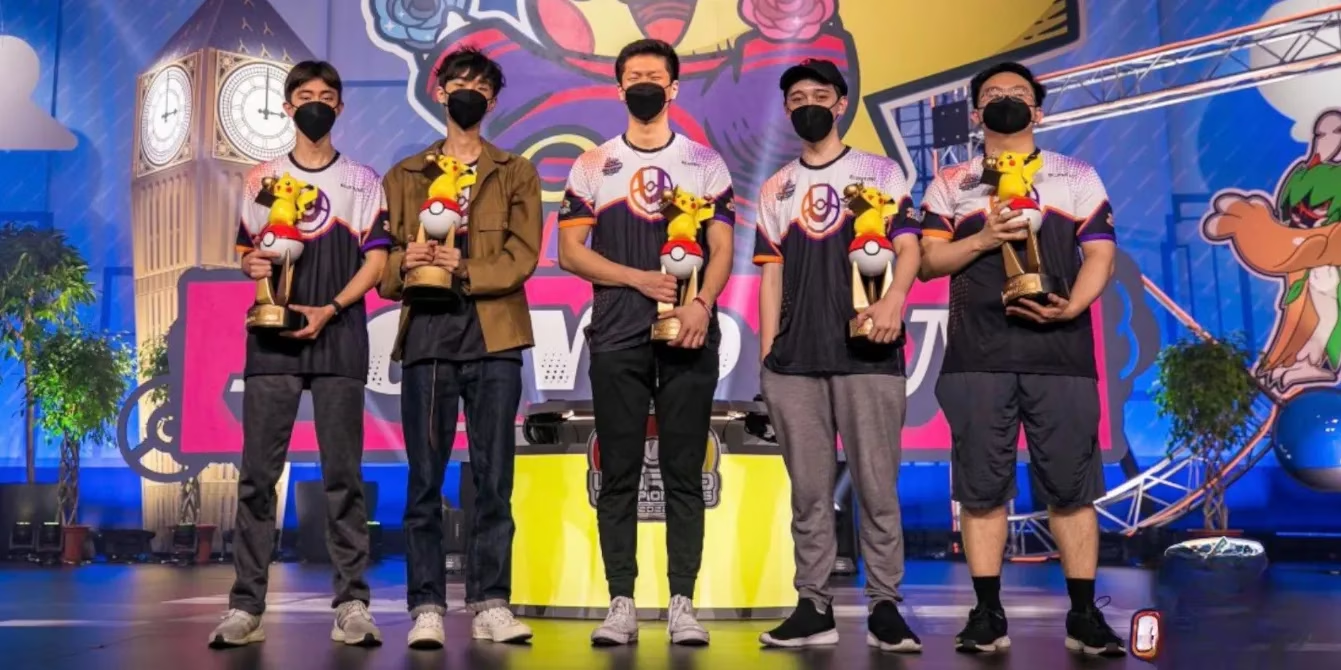
The Pillars of Victory: Unmatched Flexibility and Preparation
What immediately set BLVKHVND apart was their incredible adaptability. While other top contenders seemed locked into rigid strategies, BLVKHVND embraced a fluid, dynamic approach. Slash, one of the team's core supporters, pinpointed this as their key advantage. "Our versatility was our greatest weapon," he told me. "We entered every match with a vast arsenal of team compositions, each meticulously crafted for our specific opponents. That level of tailored preparation was something we simply didn't see from anyone else."
This flexibility was most evident in their champion pool. While Slash and Elo expertly manned the meta-supporting roles of Blissey and Hoopa, the other three players were strategic chameleons. Kyriaos, Junglebook, and Overlord collectively deployed an astonishing ten different Pokémon throughout the tournament, a number that dwarfed their competitors' more limited selections.
| Player | Primary Role | Notable Pokémon Played |
|---|---|---|
| Slash | Supporter | Blissey, Hoopa |
| Elo | Supporter | Hoopa, Blissey |
| Junglebook | Attacker/All-Rounder | Cinderace, Greedent, Dragonite |
| Kyriaos | All-Rounder/Defender | Various (Multiple Picks) |
| Overlord | Attacker/Defender | Various (Multiple Picks) |
Beyond the Meta: A Philosophy of Counter-Strategy
Kyriaos elaborated on their strategic depth, moving the conversation beyond simply picking strong Pokémon. "Many teams identified the powerful meta picks and treated them as a universal solution," he explained. "Our focus was different. We asked ourselves: 'What are our vulnerabilities? Which enemy Pokémon exploit those weaknesses?' The competition isn't just about your own best plays; it's about deconstructing your opponent."
This analytical mindset meant BLVKHVND didn't just have one or two strong team compositions (or "comps"). They had a prepared response for nearly every scenario. "We studied and analyzed our opponents so thoroughly," Kyriaos continued, "that we could predict their contingency plans. If their primary strategy failed, we knew exactly what they'd switch to in game two. That foreknowledge allowed us to secure 2-0 victories consistently."
Their confidence in their analysis was so absolute that they made targeted, individual counter-picks. A prime example was Junglebook, famously associated with the powerful Attacker Cinderace. For most of the tournament, he deliberately played other Pokémon like the disruptive Greedent or the resilient Dragonite, saving his signature pick for the perfect moment.
The Grand Finale: A Calculated Signature Moment
That moment arrived in the Grand Finals against Europe's Nouns Esports. "We were extensively prepared for Nouns," Junglebook revealed. "Our analysis showed that Cinderace would be exceptionally potent specifically against their preferred style and composition. It felt incredible to not only bring out my signature character on the biggest stage but to completely dominate with it because our strategy was so sound."
This wasn't a decision based on comfort or ego; it was the culmination of their strategic process. The Cinderace pick was a surgical strike, a tool chosen from their broad kit because it was the perfect counter for that specific opponent at that specific time.
The New Standard: Lessons for the Future
BLVKHVND's victory has fundamentally raised the bar for competitive Pokémon Unite as we look toward the 2027 season. They have proven that world-class performance requires more than just mechanical skill with the strongest Pokémon. Their legacy is a blueprint based on three core principles:
-
Deep, Analytical Scouting: Studying opponents' patterns, preferred compositions, and backup plans is non-negotiable.
-
Roster Versatility: Teams must cultivate proficiency with a wide array of Pokémon to avoid predictability and enable counter-picking.
-
Strategic Humility: Ego must be set aside to flex roles and pick compositions that counter the enemy, not just those that are personally favored.
Their triumph sends a clear message to aspiring champions: the path to the trophy is paved with preparation, adaptability, and intellectual rigor. BLVKHVND didn't just play the game better; they outthought everyone. They transformed the arena from a test of execution into a chess match, and in 2026, they were the grandmasters. The question for every other team now is not just how to improve their play, but how to evolve their entire approach to competition.