In the ever-evolving landscape of live service games, the year 2026 stands as a testament to both the promises and perils of continuous development. These games, constantly updated with balance patches and fresh content, have transformed gaming into a dynamic, ever-changing world. However, as the competition grows fiercer, even established giants and promising newcomers must navigate the delicate balance between innovation and preservation, striving to captivate new audiences while retaining their loyal fanbases. The journey from 2023 to 2026 has been a crucible, testing the mettle of various titles as they adapted, stumbled, and, in some cases, soared to new heights.
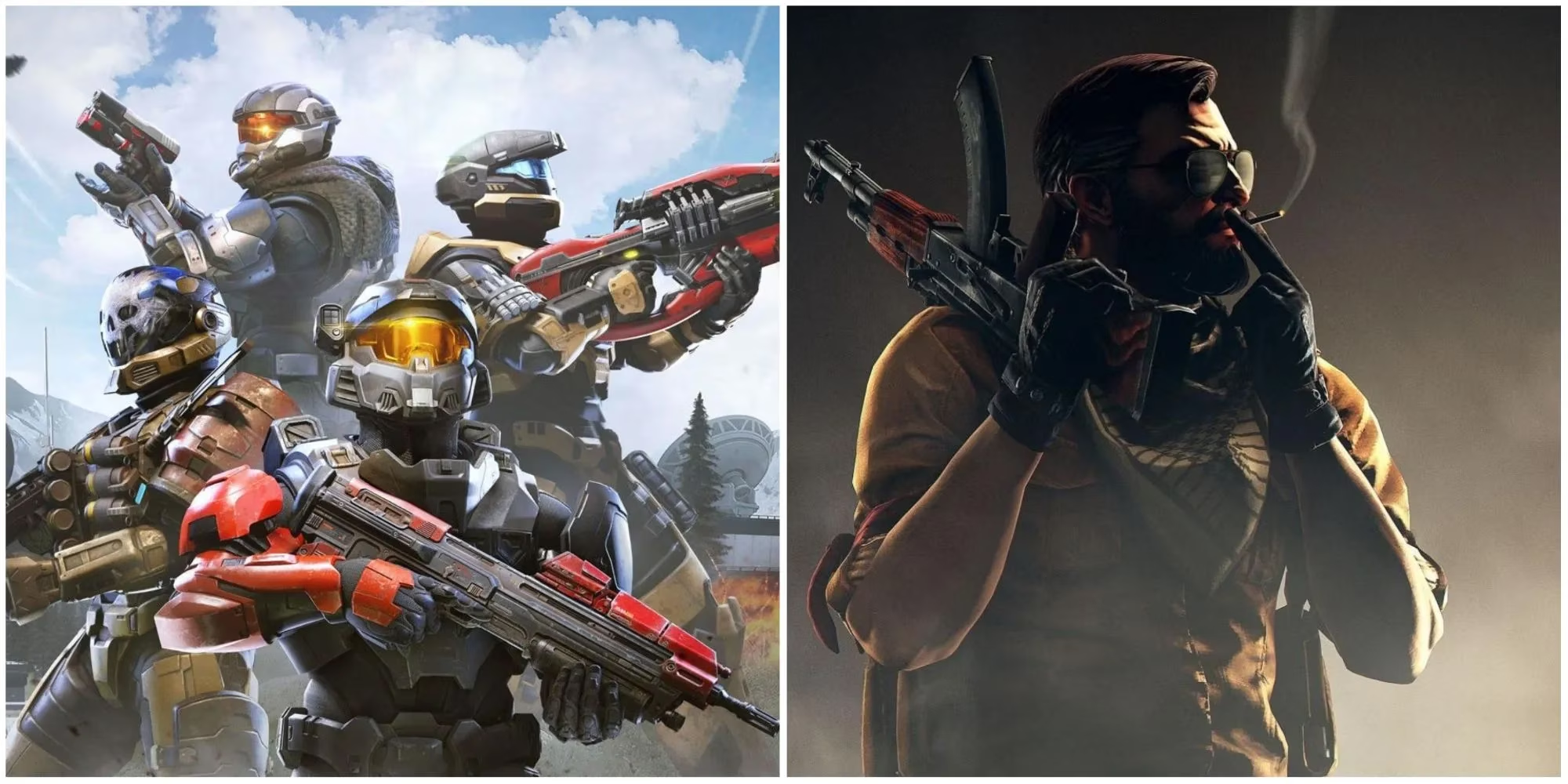
For years, Counter-Strike: Global Offensive (CS:GO) glided along like a perfectly calibrated Swiss watch, its intricate mechanics of bomb defusal and tactical play ticking without interruption. Lacking a true rival, Valve operated without the pressure that defines the modern live-service arena. This changed dramatically with the arrival of Valorant in 2020, a competitor that didn't just challenge CS:GO but reshaped the entire tactical shooter genre for a new generation. By 2026, the pressure had intensified. The challenge for CS:GO was no longer about staying the same; it was about evolving without losing its soul. The game's community, a fortress of tradition, viewed changes with the suspicion of an archivist guarding a priceless manuscript. Valve's response in the intervening years was a masterclass in measured modernization, focusing on visual overhauls and performance enhancements that felt less like a revolution and more like a meticulous restoration. This strategy allowed CS:GO to maintain its core identity while its player numbers remained a testament to its enduring appeal, proving that some legacies can be polished for a new era without being erased.
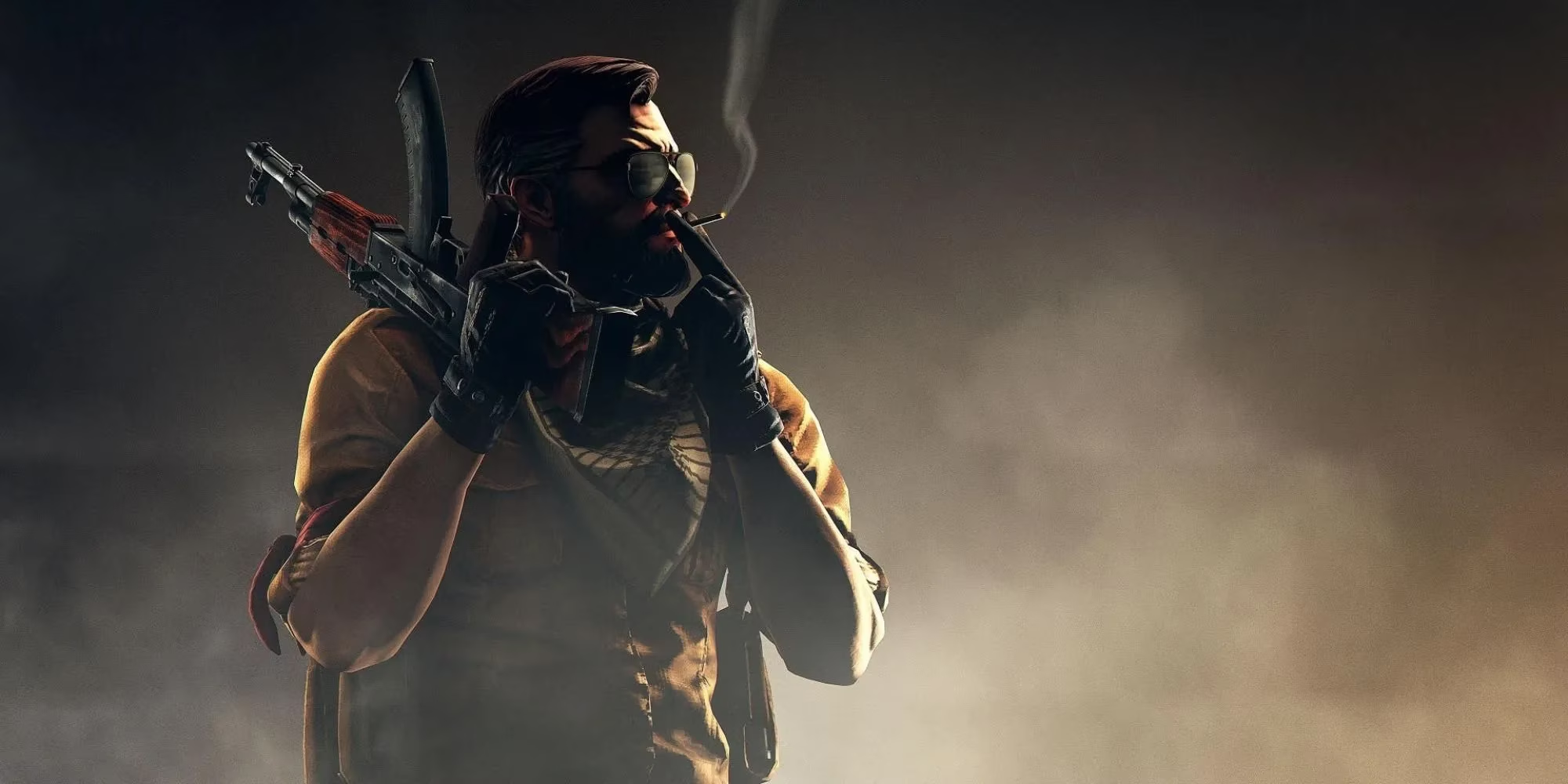
In the MOBA sphere, Dota 2 has long operated like a brilliant but reclusive scholar, its depth and complexity a source of pride and a barrier to entry. For years, it existed under the colossal shadow cast by League of Legends, a shadow that only seemed to grow longer. The player gap was a chasm that many thought could never be bridged. The pivotal year of 2023, however, became a turning point. Valve embarked on a campaign that was part marketing blitz, part systemic overhaul. They aggressively promoted Dota 2's distinct advantages:
-
A Truly Free Roster: Emphasizing that all heroes are available without grind or paywall.
-
Strategic Depth: Highlighting the game's unforgiving but rewarding mechanical complexity.
-
Community-Driven Events: Doubling down on The International and supporting the creative workshop scene.
This multi-pronged approach didn't just stop the bleed; it attracted a wave of players disillusioned with other titles' monetization strategies. By 2026, Dota 2 had carved out a sustainable, fiercely dedicated niche. It was no longer the "other" MOBA but was celebrated as the premier choice for players seeking uncompromising strategic depth, a phoenix that rose not by mimicking its rival, but by fully embracing its own unique flame.
The story of Rainbow Six Siege is one of resilience. After a golden period, 2022 saw its active player base decline like sand through an hourglass, driven by content drought and a perceived over-focus on the professional meta. The game's future seemed uncertain. Yet, the developers at Ubisoft remembered their own history of successful comebacks. In 2023, they executed a bold maneuver: transitioning the core game to a free-to-play model. The initial surge of new players was like a defibrillator to the community. More importantly, Ubisoft followed through with a renewed content pipeline and a careful rebalancing act that considered both casual enjoyment and competitive integrity. By 2026, Rainbow Six Siege had not just recovered; it had solidified its position as the definitive tactical destruction simulator. Its comeback was a lesson in listening and adapting, proving that even a weathered fortress can be reinforced and its gates thrown open to welcome a new generation of defenders and attackers.
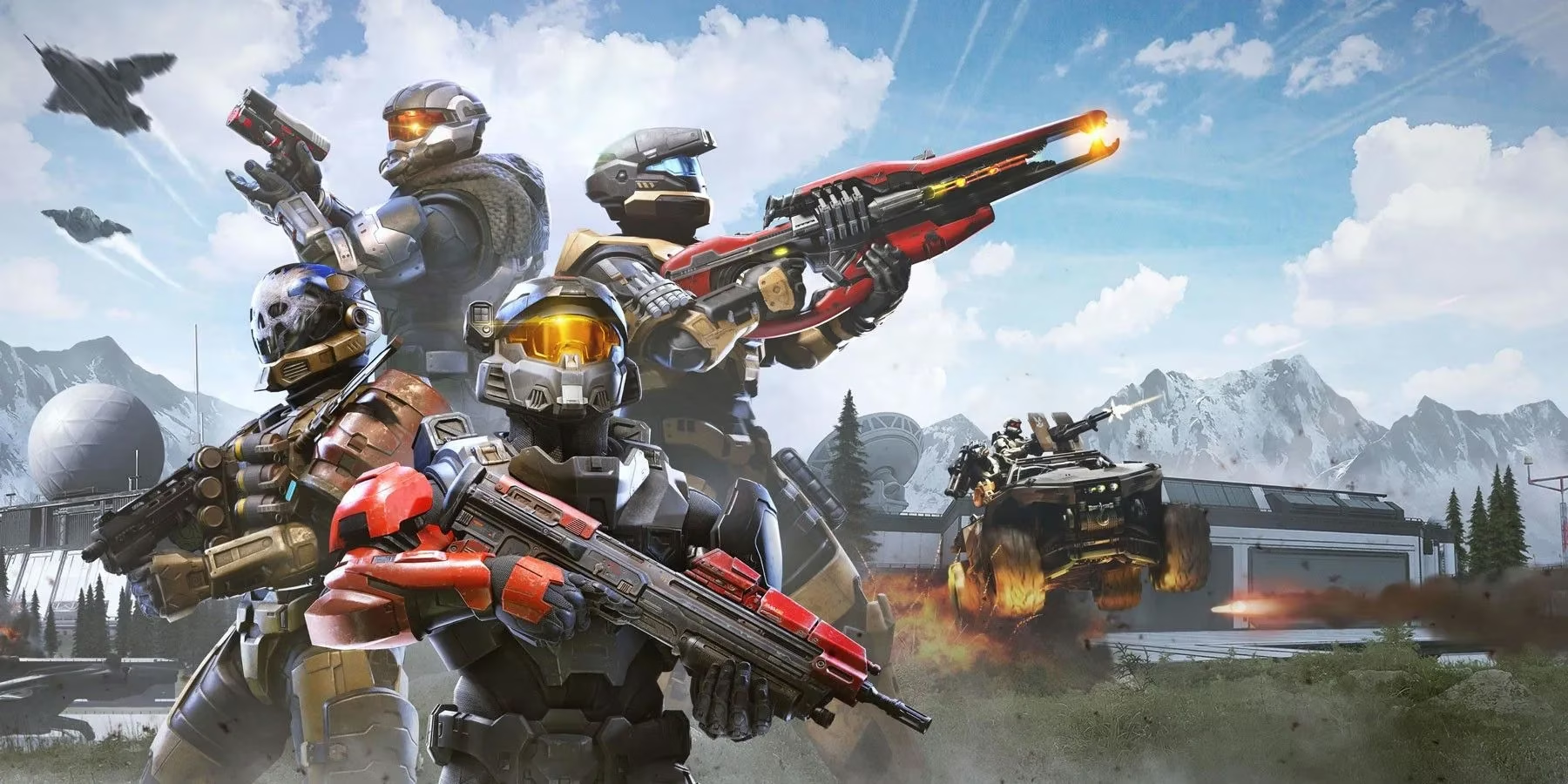
Halo Infinite's journey into live service began with the fanfare of free-to-play multiplayer but quickly became mired in the quicksand of delayed promises and unmet expectations. 343 Industries, carrying the weight of a legendary franchise, struggled to match the relentless update cycles of its competitors. The community's faith, once a blazing beacon, flickered precariously. The path to 2026 was arduous, defined by a series of critical course corrections:
| Challenge (2022-2023) | Response & Outcome (By 2026) |
|---|---|
| Delayed seasonal content & features | Adoption of more transparent, reliable roadmaps |
| Lack of meaningful progression | Introduction of a revamped, rewarding progression system |
| Stale multiplayer meta | Consistent, community-informed balance updates |
| Missing staple franchise modes | Gradual, high-quality reintroduction of fan-favorite features like Firefight |
Leveraging the undeniable strength of the Halo universe—its lore, its iconic gameplay feel—the developers slowly but steadily rebuilt trust. By 2026, Halo Infinite was no longer the cautionary tale of live-service launch but a respected, if not dominant, player in the space, a testament to the power of a beloved IP and determined, sustained effort.
SMITE, the third-person mythology MOBA, has always been the genre's eccentric artist, brilliant in concept but perpetually struggling for mainstream recognition. Its decline in late 2022 signaled a potential crisis. The required changes weren't just about new gods or balance tweaks; they needed to be transformative, like a sculptor finding the true form hidden within the marble. Hi-Rez Studios took a daring approach. They deepened the game's unique third-person combat, making it more visceral and impactful. They expanded the narrative lore surrounding their pantheons, turning matches into epic mythological clashes. Crucially, they refined the new-player experience, making its complexities more approachable. By 2026, SMITE had cultivated a passionate, stable community that cherished its uniqueness. It became the MOBA for players who found traditional top-down perspectives sterile, a vibrant tapestry woven from the threads of global myths that finally found its perfect audience.
The launch of Call of Duty: Warzone 2 was a spectacle plagued by technical demons—crashes, disconnects, and instability threatened to sink the battle royale titan before it could sail. The developers at Infinity Ward and Raven Software faced a Herculean task: fixing a live game while simultaneously producing new content to keep players engaged. Their approach in the years that followed was relentless. They stabilized the core experience with surgical precision, addressed community grievances about gameplay mechanics like the looting system, and began delivering consistent, high-quality thematic updates. By leaning on the colossal infrastructure and expertise of the Call of Duty franchise, Warzone 2 slowly transformed from a buggy mess into a polished, content-rich platform. By 2026, it stood as a pillar of the battle royale genre, its early struggles a distant memory, proving that even the rockiest launches can be smoothed into a highway for millions of players.
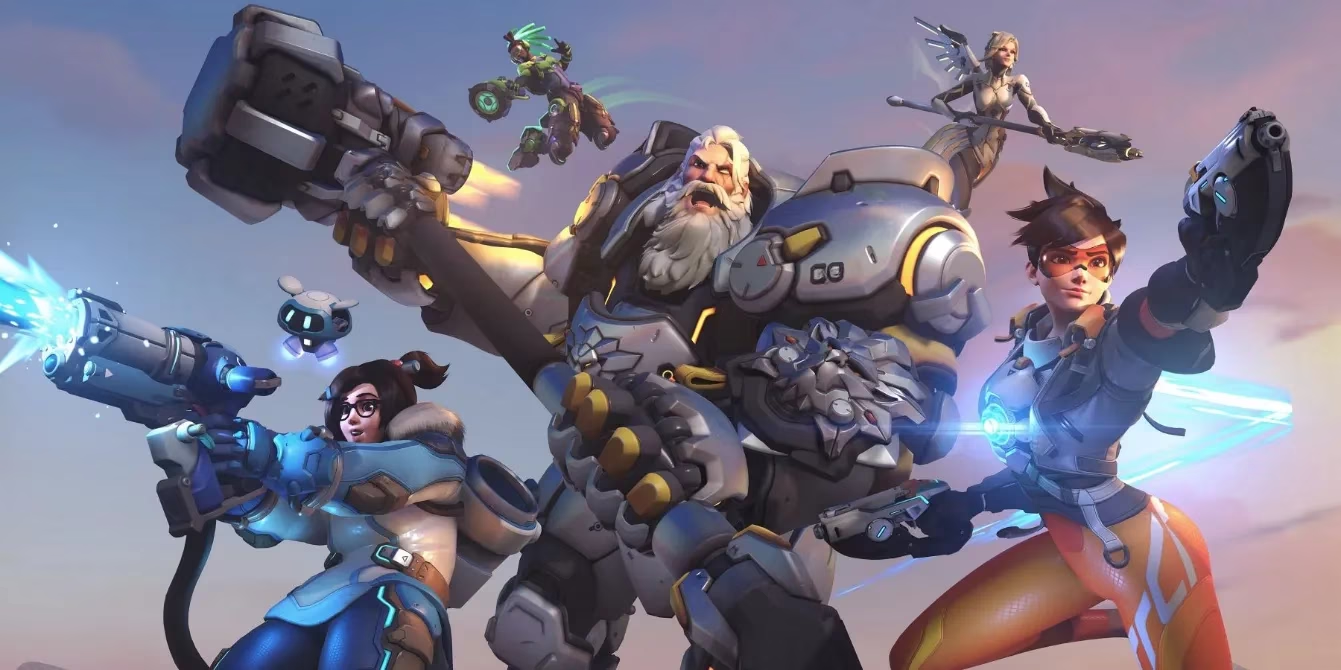
Overwatch 2's transition to free-to-play in late 2022 was a double-edged sword. It opened the gates to a flood of new heroes and players, but it also unleashed a torrent of criticism from the established community over missing PvE content and a controversial battle pass. Blizzard found itself navigating a community storm where excitement and resentment swirled together like oil and water. The road to 2026 was paved with a fundamental shift in communication and delivery. The developers adopted a more transparent, dialogue-driven approach with players. They reworked progression systems to feel more rewarding, and while the grand PvE vision was scaled back, they delivered consistent, engaging co-op missions and story events. By faithfully supporting the core PvP experience with regular new heroes, maps, and balance changes, Blizzard managed to stabilize Overwatch 2. It became a game defined not by its failed promises, but by its solid, ongoing execution—a vibrant team shooter that, while different from its original vision, secured its place in the competitive landscape through adaptability and consistent care.
As 2026 unfolds, the live service arena remains a brutal and beautiful proving ground. The games that thrive are those that understand their core identity, listen to their communities with more than just ears, and possess the courage to evolve. They are no longer mere products but living ecosystems, and their continued survival is the ultimate high-stakes match.