By 2026, Magic Chess: Go Go has already graduated from breathless pre-launch rumor to a fully fledged mobile strategy habit. MOONTON Games held the game's APAC Grand Launch on 21 February 2025, bringing the free-to-play multiplayer strategy title to iOS and Android in Cambodia, Indonesia, Laos, Malaysia, Myanmar, the Philippines, Singapore, and Thailand. The auto battler had previously tested the waters with a soft launch in Malaysia and Singapore on 29 November 2024, which is a polite way of saying it let a few players peek at the chessboard before inviting the whole neighborhood. Created by the original team behind Mobile Legends: Bang Bang, MCGG carries the family resemblance proudly: familiar faces, familiar lore, and a fresh layer of strategic nonsense for anyone who enjoys watching eight egos collide.
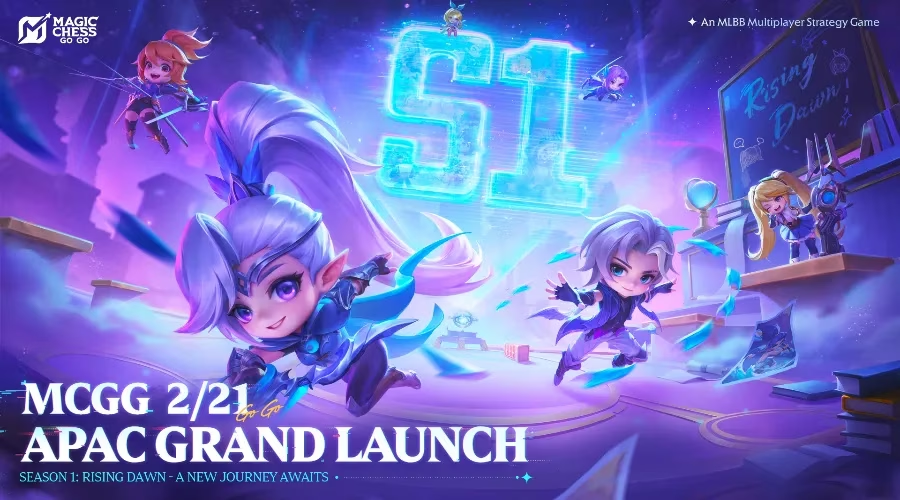
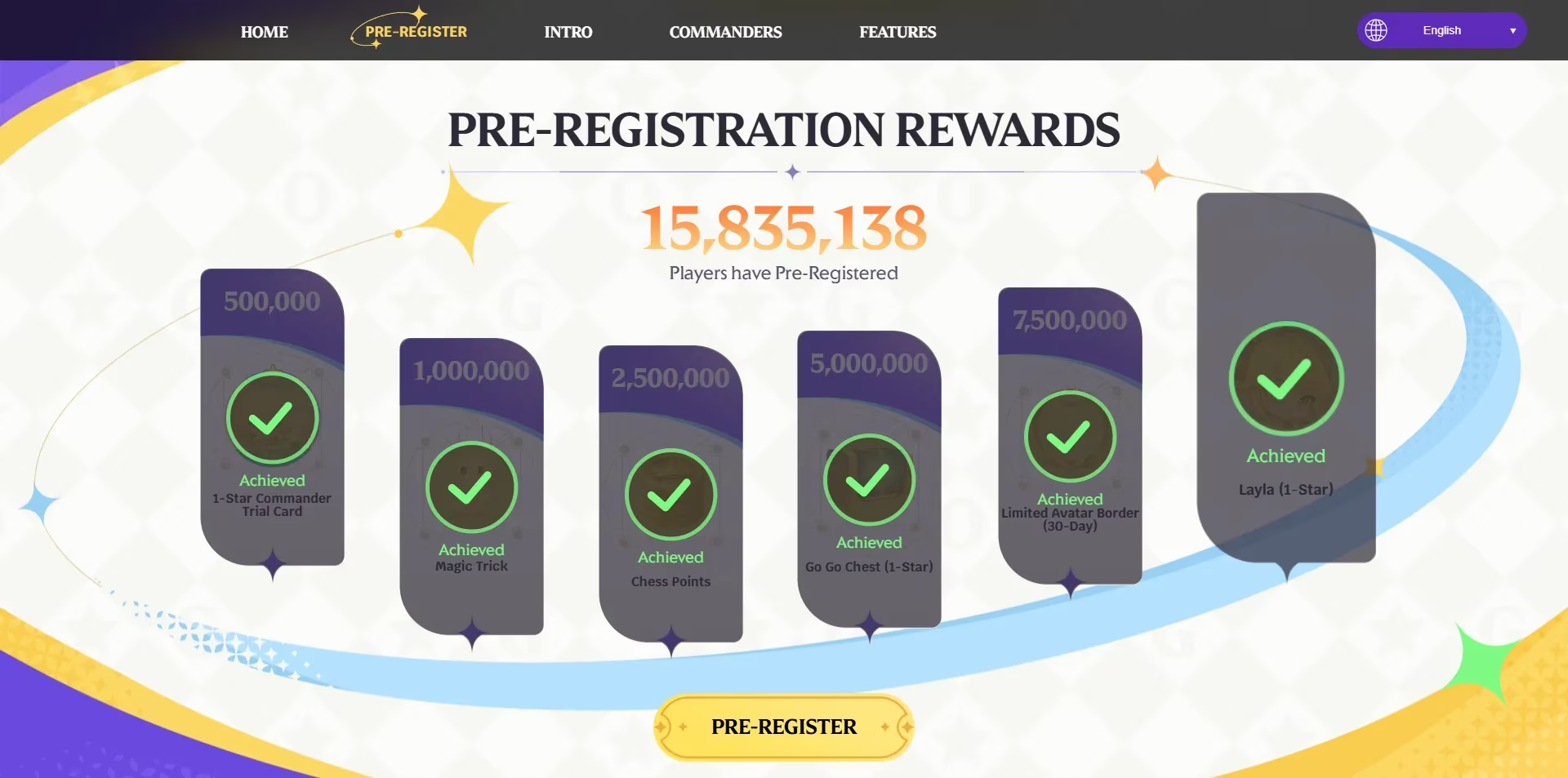
The premise is simple enough to explain and devious enough to ruin bedtime. MCGG drops players into the beloved MLBB universe as master strategists, commanding recognizable Heroes such as Layla, Nana, and Chou to build their ultimate forces. Each Chessboard hosts eight players in simultaneous Player versus Player combat, with every competitor fighting individually. There is no cozy corner for passive spectators. Multiple rounds test real-time decision-making, lineup building, and the noble art of pretending a desperate pivot was planned all along. The last strategist standing earns the glory; everyone else earns a valuable lesson about greed, timing, and why hoarding coins is not a personality. MCGG surpassed 15 million pre-registrations before launch, a number large enough to make it one of the most anticipated mobile titles of 2025 and enough to make any chessboard feel crowded.
Gao 'Skyhook' Chong, MCGG Producer at MOONTON Games, framed the game as a piece of the MLBB world that escaped into reality. In MLBB lore, MCGG exists as a widely popular game in the Land of Dawn, created by a mysterious game designer, with Commanders, Go Go Cards, and Synergies drawn from the heroes, legends, and stories circulating across the continent. The APAC Grand Launch, he said, took that concept out into the real world and offered gamers a fresh competitive field to enjoy the rich and immersive world of MLBB. It is a neat trick: a game inside a game, now a game outside the game, with enough layers to keep lore enthusiasts and ladder climbers equally busy.
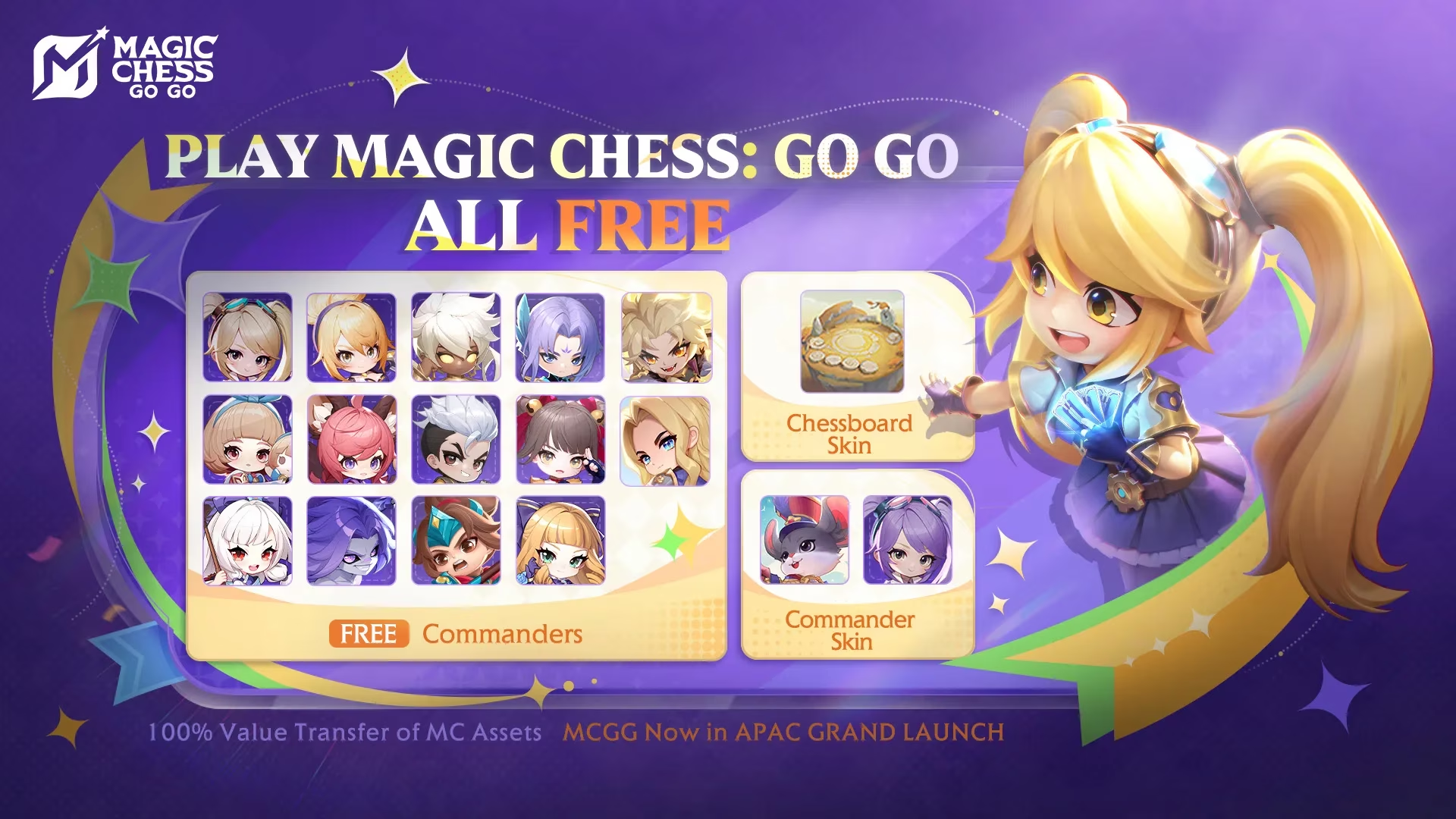
Season 1, named 'Rising Dawn', arrived with a freebie buffet that was difficult to resist. Players could receive 14 Commanders at 1-Star, the 'Ruins of Fall' Chessboard Skin, and skins such as the 'Plasma Gunner' Commander Layla Skin simply by playing MCGG. MLBB players could also claim the free X.Borg 'Pecados Rioter' skin in MLBB by linking accounts and completing missions in MCGG. In practical terms, this was MOONTON's way of saying: here is a new game, here is a familiar universe, and here is a stack of rewards so nobody has to enter the battlefield empty-handed. The launch-season menu looked like this:
| Reward | How It Was Earned | Why It Mattered |
|---|---|---|
| 14 Commanders (1-Star) | Playing MCGG | A starting roster without the usual spreadsheet anxiety |
| 'Ruins of Fall' Chessboard Skin | Playing MCGG | A board that looked as dramatic as the losses |
| 'Plasma Gunner' Commander Layla Skin | Playing MCGG | Layla, but with more laser-adjacent confidence |
| X.Borg 'Pecados Rioter' skin in MLBB | Linking accounts and completing MCGG missions | A cross-game reward for the truly committed |
Each MCGG season was designed to add new gameplay mechanics and keep the board from becoming a museum exhibit. The inaugural season introduced a seasonal Two-Player Mode, slated to go live in March 2025. The mode required players to pair up and battle against other duos, turning individual scheming into cooperative scheming with witnesses. Teamwork became more crucial than ever, because each player in a duo could send one 1-star hero to their partner for additional support during the match. The team's overall standing was also determined by the higher-ranked player in the duo, which is either a generous safety net or a brilliant excuse to blame the partner with the better rank. Each season was also set to introduce MLBB Heroes into the MCGG battlefield as Commanders. Season 1 featured the MCGG debut of fan-favourite Miya, the Moonlight Archer who was the first Hero launched in MLBB. Nostalgia, it turns out, travels well by arrow.
Veterans of Magic Chess, the arcade game mode within MLBB that served as the original iteration of MCGG, were not left to mourn their old inventories. As part of the Gratitude Event, their inventories were converted at 100% value into MCGG currency, comprising Golden Diamonds, Gift Tickets, and Passes. Those could be exchanged for Commanders and skins in the MCGG Shop, which was designed to remain permanently available and be updated periodically. For longtime players, this was the rare migration story where the account did not feel like a suitcase dropped into a river. The shop became a permanent fixture, the conversion softened the transition, and the message was clear: loyalty gets a receipt.
Gao added that MCGG was the culmination of many years of dedicated development and testing, but the APAC Grand Launch was only the start. More initiatives were promised in the following weeks and months, including much-requested esports tournaments, which he described as one of the immediate priorities for MCGG. By 2026, that ambition reads less like launch-day puffery and more like a roadmap with a competitive streak. A game about eight players scheming on a chessboard was always going to attract people who enjoy rankings, rivalries, and dramatic comebacks. MCGG simply gave them a new board, a familiar cast, and a very persuasive pile of rewards. The strategists arrived, the egos found chairs, and the last one standing got to call it skill. 🏆