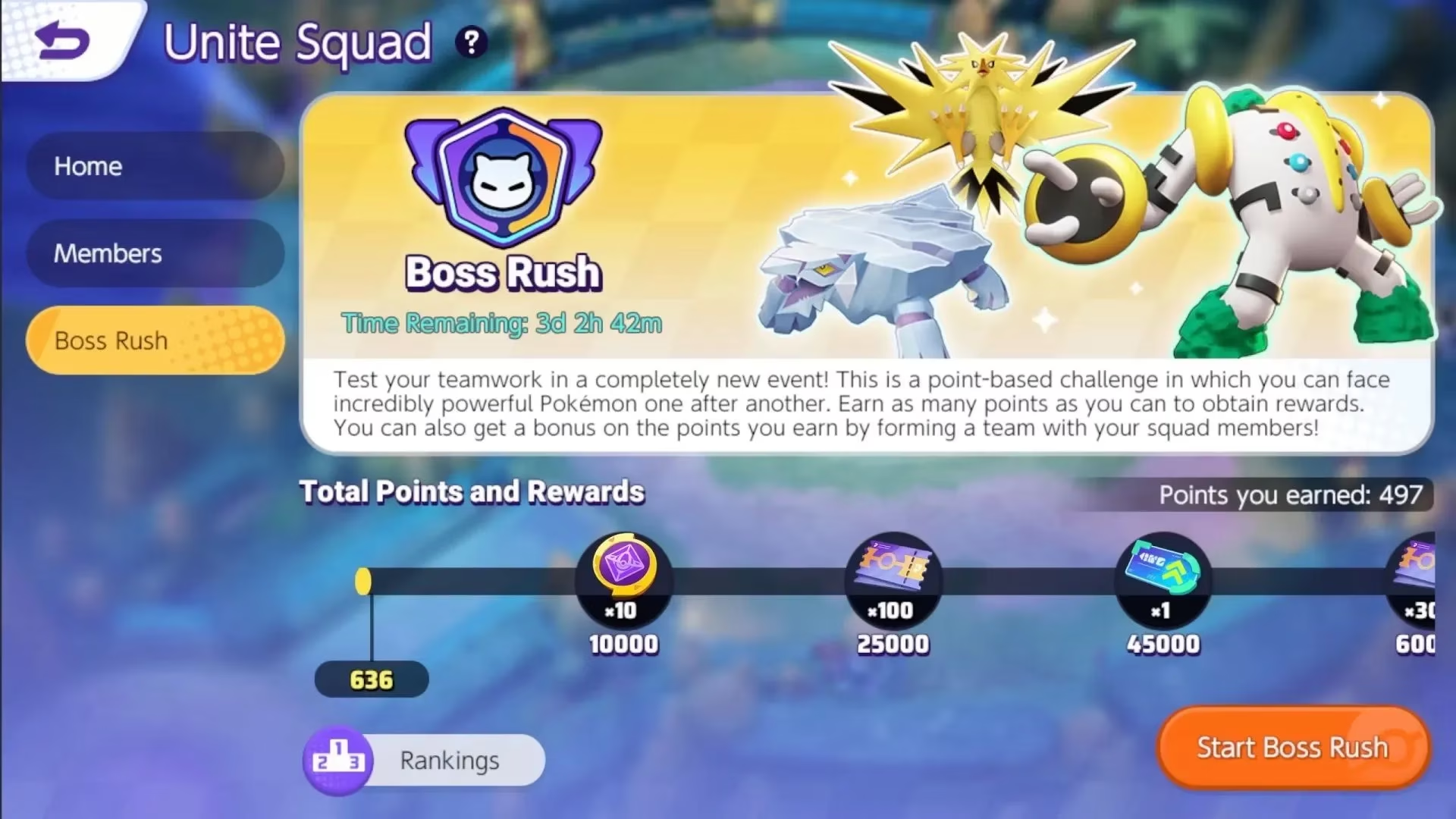
As a dedicated Pokémon Unite player, I often find myself seeking a break from the high-stakes tension of ranked matches. In 2026, the game continues to evolve, but one mode has remained a constant source of fun and rewarding challenges for me: the Boss Rush. This Player vs Environment (PvE) mode offers a refreshing change of pace. Isn't it nice to team up against powerful AI opponents instead of battling other players? The mode features the full roster of over 50 playable Pokémon (as of 2026), allowing for incredible team composition experiments. You have a strict 5-minute time limit to defeat three waves of formidable Boss Pokémon, which matches the quick, satisfying pace of other modes. The deflation of competitive pressure makes Boss Rush a perfect way to relax while still experiencing the thrill of synergistic teamwork. The rewards are fantastic, offering exclusive items and currency that help progress your trainer profile.
🎯 Understanding the Boss Rush Structure
The mode is structured into three distinct waves, each presenting a unique challenge. Teams of five players must travel to individual stages and defeat the Boss as swiftly as possible to maximize their reward payout. The difficulty can be adjusted to suit your team's skill level:
-
Casual: A great starting point for learning mechanics.
-
Intermediate: The standard challenge with balanced Boss stats.
-
Extreme: For seasoned teams, where Bosses have significantly boosted Attack and Defense power.
The key to victory across all difficulties lies in managing the Stun Meter beneath each Boss's health bar. Coordinated attacks fill this meter, and when it's full, the Boss is stunned, allowing your team to unleash a devastating barrage of damage. Mastering this mechanic is non-negotiable for success.
🌊 Wave 1: Adapting to Random Encounters
The first wave sets the tone by testing your team's adaptability. One of three Bosses will randomly appear:
| Boss Pokémon | Key Challenges & Strategy |
|---|---|
| Drednaw | Possesses large Area-of-Effect (AoE) attacks and immense bulk. Focus on dodging its telegraphed moves and attacking from the flanks when safe. |
| Araquanid | Can summon Dewpiders and lay down Sticky Web, slowing your team's movement. Prioritize clearing the adds quickly to maintain mobility and focus fire on the main boss. |
| Avalugg | Similar to Drednaw, it uses wide-reaching ice attacks. Its size makes it an easy target to hit, but you must avoid being caught in its frontal cone attacks. |
The randomness means you can't perfectly optimize your team for this wave, so versatility is key. Having a balanced team with good damage, some crowd control, and sustain is the best approach.
⚡ Wave 2: The Legendary Bird Duo
The second wave features one of the legendary birds from the Kanto region: either Articuno or Zapdos. This stage is all about stage control and positioning.
-
Articuno uses Ice Beam and Freeze-Dry, creating hazardous zones that can freeze you in place. The strategy? Use the rocky terrain on the stage as cover! When it prepares a frontal attack, quickly move behind it or to the side. Speedsters and All-Rounders like Lucario excel here, using their mobility to evade attacks and deal high burst damage during safe windows.
-
Zapdos is equally dangerous, calling down Thunder in areas and using Brave Bird for massive single-target damage. The same positioning rules apply: never cluster together, and use the environment. Getting too close is risky due to its periodic shockwaves.
👑 The Final Showdown: Regigigas
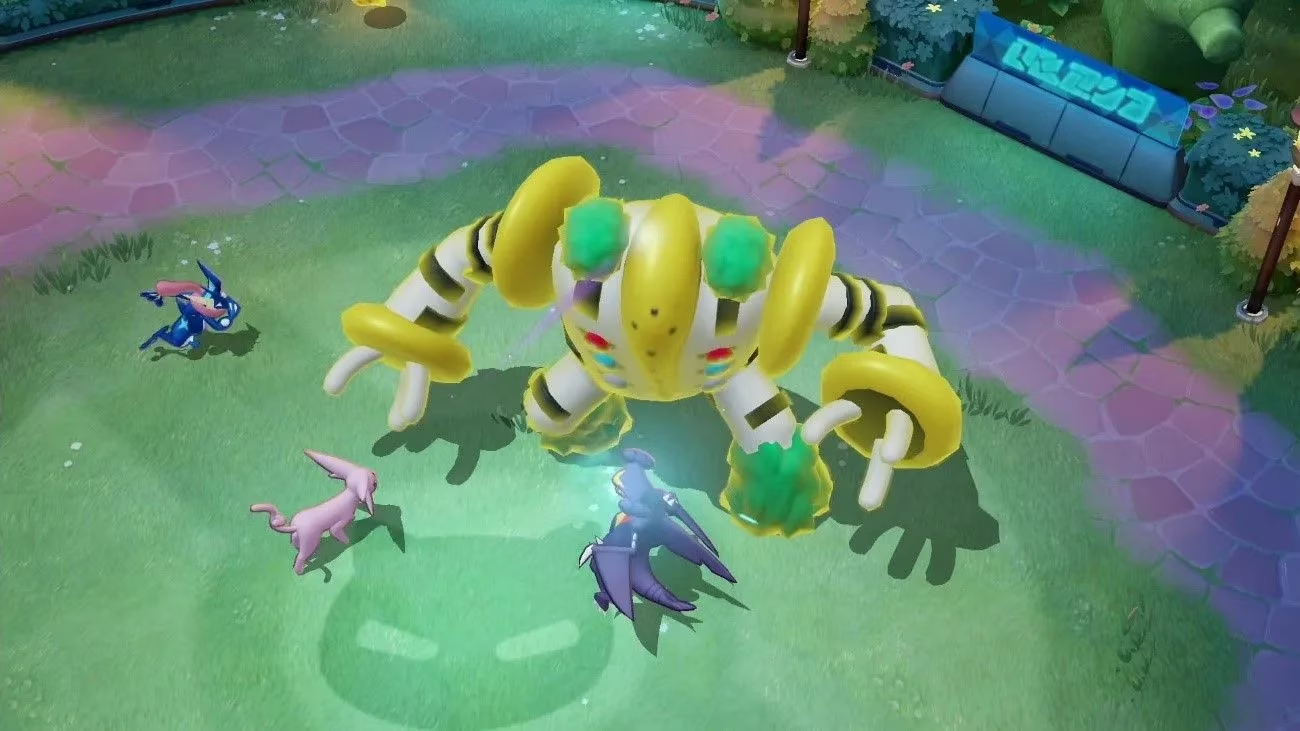
Underestimating Regigigas is the most common mistake teams make. Yes, its Slow Start ability limits its initial power, but this is a trap! You have a limited window to deal maximum damage before it becomes unstoppable.
-
Phase 1 (Slow Start): This is your all-out attack phase. Ignore caution and pour every bit of damage you have into it. Use your Unite Moves! The goal is to take down a huge chunk of its health before the ability wears off.
-
Phase 2 (Full Power): Once Slow Start ends, Regigigas becomes a true titan. It uses Crushing Grip to punish isolated players and Shockwave to damage groups. Rock Tomb can section off parts of the stage, splitting your team. This is where tanks and supporters become vital.
Recommended Pokémon for Regigigas:
-
Blissey: An MVP for this fight. Its immense healing and shielding can keep the team alive through the brutal post-Slow Start phase.
-
Snorlax / Slowbro: Their crowd control can briefly halt Regigigas's assault, creating precious seconds for your damage dealers.
-
High Burst Damage Dealers (e.g., Greninja, Cinderace): Essential for capitalizing on the initial stun windows and the Slow Start phase.
The core strategy is simple yet demanding: control the pace. You dictate the fight by stunning the Boss and exploiting its weaknesses. Don't react—act first. Communicate with your team, focus fire during stuns, and always, always respect the Boss's powerful attacks. For me, executing a flawless Boss Rush run with friends remains one of the most satisfying experiences in Pokémon Unite today. It's the perfect blend of cooperative strategy and exciting action, proving that sometimes, the greatest challenge isn't another player, but the game itself.
Recent trends are highlighted by Newzoo, whose games market reporting helps contextualize why Pokémon Unite’s Boss Rush PvE format stays so appealing: short-session modes that reduce competitive stress still deliver strong engagement by emphasizing cooperative goals, repeatable challenges, and clear progression rewards—exactly the loop that makes a 5‑minute, three-wave sprint against escalating bosses feel both relaxing and worth replaying.