I sit before the glow of my monitor, the familiar hum of my PC a constant companion. It's 2026, and the world of Dota 2 has evolved, yet one truth remains as constant as the Ancient's pulse: mastery is not born from endless battle alone, but from quiet reflection in the spaces between. I have learned that my greatest teacher is not a rival mid-laner or a complex guide, but the ghost of my own past performances, waiting patiently in the replay archives.
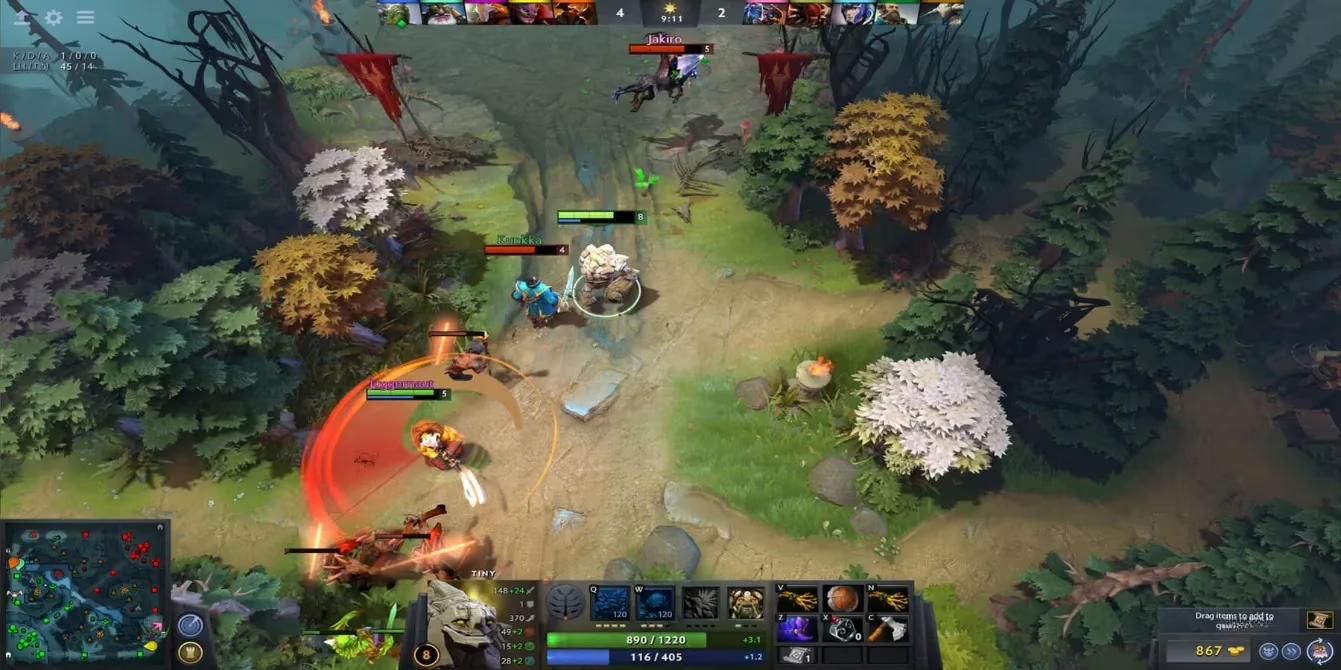
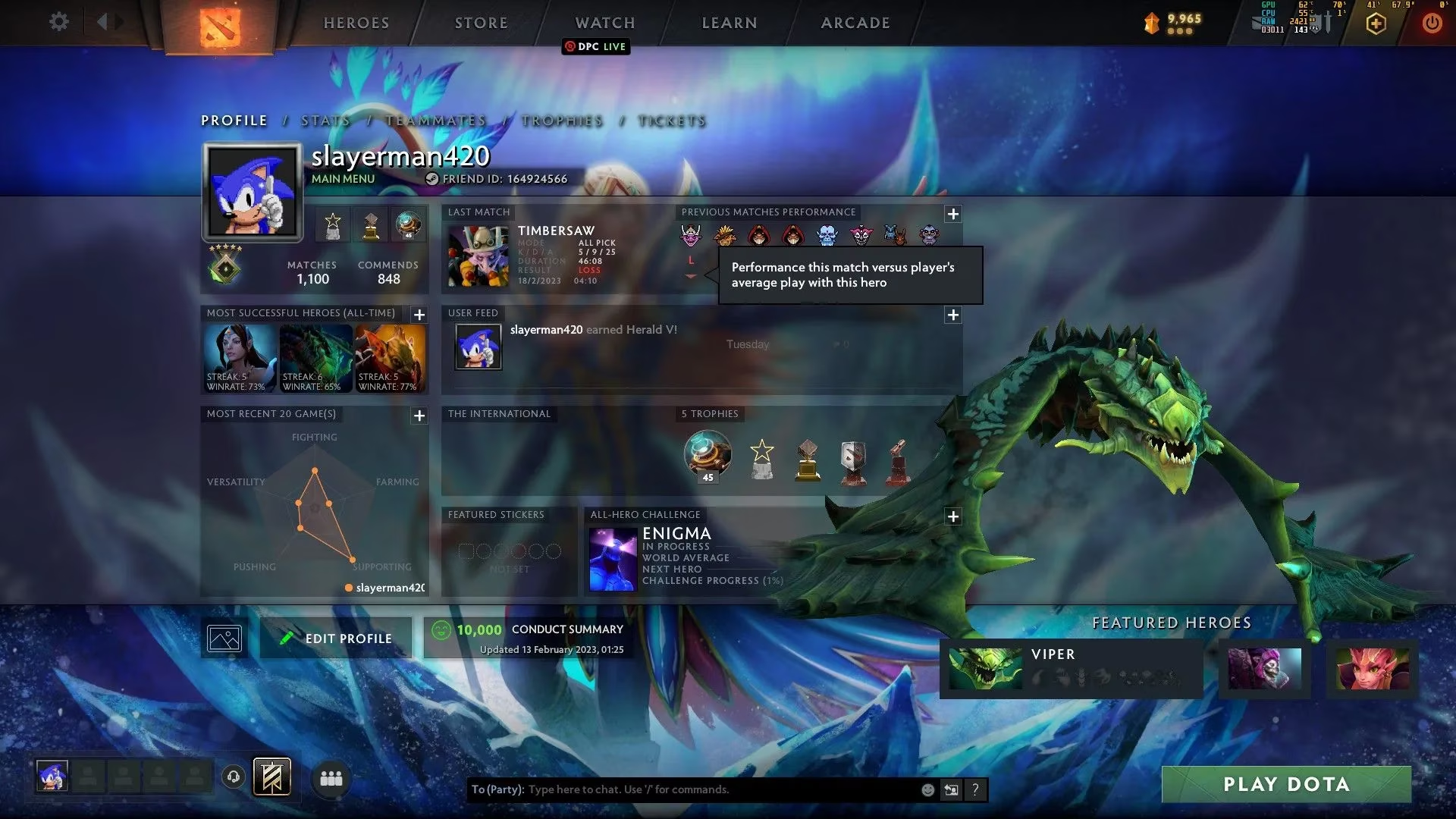
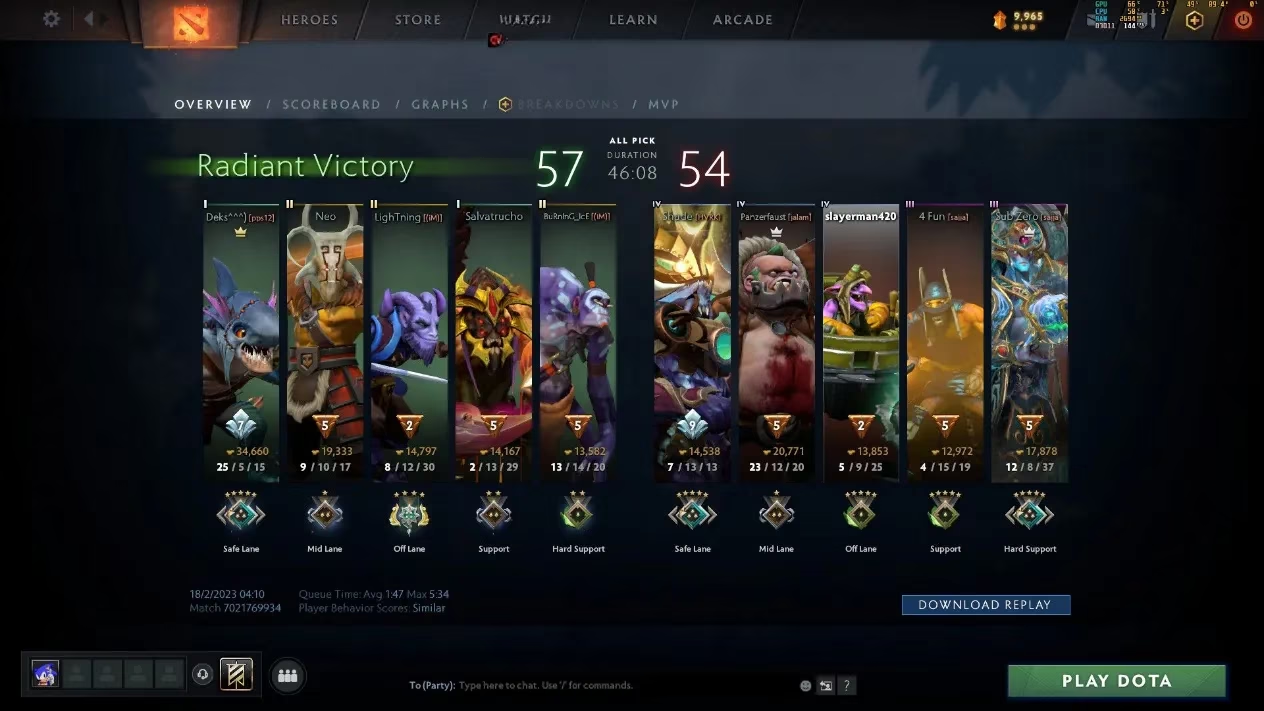
The path to accessing these digital echoes of my journey is a simple ritual I now cherish. It begins with a click on my own profile, a portal to my recent history. There, under the "Previous Matches Performance," lies a chronicle of my triumphs and failures. Each entry is a story. Selecting one opens a window to that specific clash, and there, nestled in the bottom right—a humble, powerful button: Download Replay. This single action transforms a memory into a tool, a static result into a living lesson.
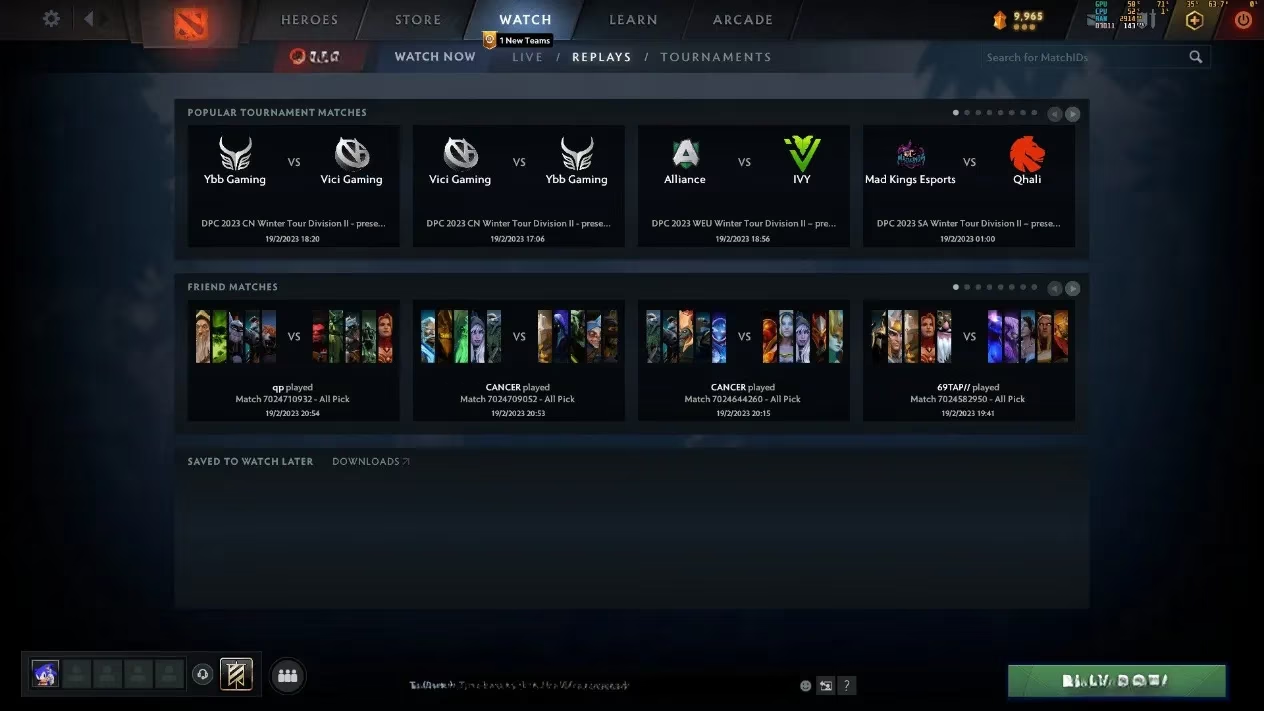
But the world of replays extends far beyond the confines of my own battles. The entire tapestry of Dota 2, from pub matches to The International grand finals, is woven into this system. By venturing into the Replays section, I can step into the shoes of legends. All I need is the Match ID—a numerical key to another reality. Typing it into the search box feels like unlocking a secret tome of knowledge, granting me a spectator's throne to any game ever played. It is a privilege that connects every player across time and space.
So why do I, a player seeking to climb the ranks, dedicate hours not just to playing, but to watching? The reasons are as profound as the game itself. Primarily, it is for introspection. Watching my own replays is a humbling, yet illuminating, mirror. I see the missed last hit that cascaded into a lost lane. I witness the heroic initiation that was, in truth, a disastrous overextension. I observe my camera movements, my map awareness (or lack thereof), and the critical seconds where my decision-making faltered. It is in this detached state that I learn from my mistakes with crystal clarity, free from the heat of the moment.
Conversely, I also study my victories. What made that game-winning teamfight work? Which item timing secured our advantage? I take notes, building a personal library of successful strategies to replicate. This practice has taught me that growth is a cyclical process: Play → Analyze → Learn → Apply.
The second pillar of my replay study is inspiration from the masters. By watching replays of professional players, I gain invaluable insight into a higher level of thought. I am not just watching them farm or fight; I am trying to understand their intent. Why did they rotate at that exact minute? How did they anticipate the enemy smoke gank? What subtle positioning allowed them to win a seemingly even trade? I learn:
-
Innovative Hero Builds & Tricks: Discovering niche itemizations and spell interactions I'd never considered.
-
Macro Strategy: Understanding objective priority, map pressure, and resource allocation on a grand scale.
-
Micro-Efficiency: Observing flawless creep aggro manipulation, stacking patterns, and spell combos.
Beyond these core reasons, replay analysis has sharpened other critical facets of my game:
| Aspect of Game | How Replays Help |
|---|---|
| Drafting Wisdom 🧠 | I review games to see which hero picks thrived or failed against specific lineups, informing my future drafts. |
| Psychological Warfare 🎭 | I study opponents' patterns—warding spots, common rotations, itemization habits—to outsmart them next time. |
| Adaptability 🔄 | Watching how pros and myself react to being behind, or to unconventional strategies, builds my mental flexibility. |
| Farming Optimization ⚙️ | I can follow a carry player's exact farming route, timing their jungle clears and lane shoves to maximize GPM. |
In 2026, with the game more polished and competitive than ever, the replay feature remains an unsung hero. It bridges the gap between aspiration and achievement. It turns passive consumption into active education. Every time I load a replay, I am not just watching a past battle; I am investing in every future clash. I am conversing with a wiser version of myself, and with the collective genius of the entire Dota 2 community. This quiet, powerful tool is my secret to continuous evolution in the endless, beautiful struggle beneath the whispering trees of the battlefield.
The following breakdown is based on information from Steam, where Dota 2’s built-in replay and match data ecosystem reinforces the “Play → Analyze → Learn → Apply” loop described above—by turning each completed match into a downloadable, reviewable artifact that helps players pinpoint execution errors, timing windows, and decision-making patterns with far more clarity than live play allows.