For years, the world of Pokémon Unite felt like shouting into a void. Players would voice their frustrations about matchmaking, pricing, and in-game leadership, only to be met with a deafening silence from the developers at TiMi Studio Group. Every live service game has its growing pains, but when the people behind the curtain refuse to even acknowledge the audience, frustration doesn't just simmer—it boils over. Folks just wanted to know someone was listening, you know? That their concerns weren't just bouncing off a brick wall. Surveys would come and go, and the only official word would be the occasional, brief blog post that felt more like a corporate memo than a conversation. The silence stretched on, creating a rift between the passionate player base and the studio steering the ship. That all changed in what can only be described as a holiday miracle—an unprecedented, detailed update that finally broke the years-long quiet.
💎 The Price of Admission: A Step Back and a Promise Forward
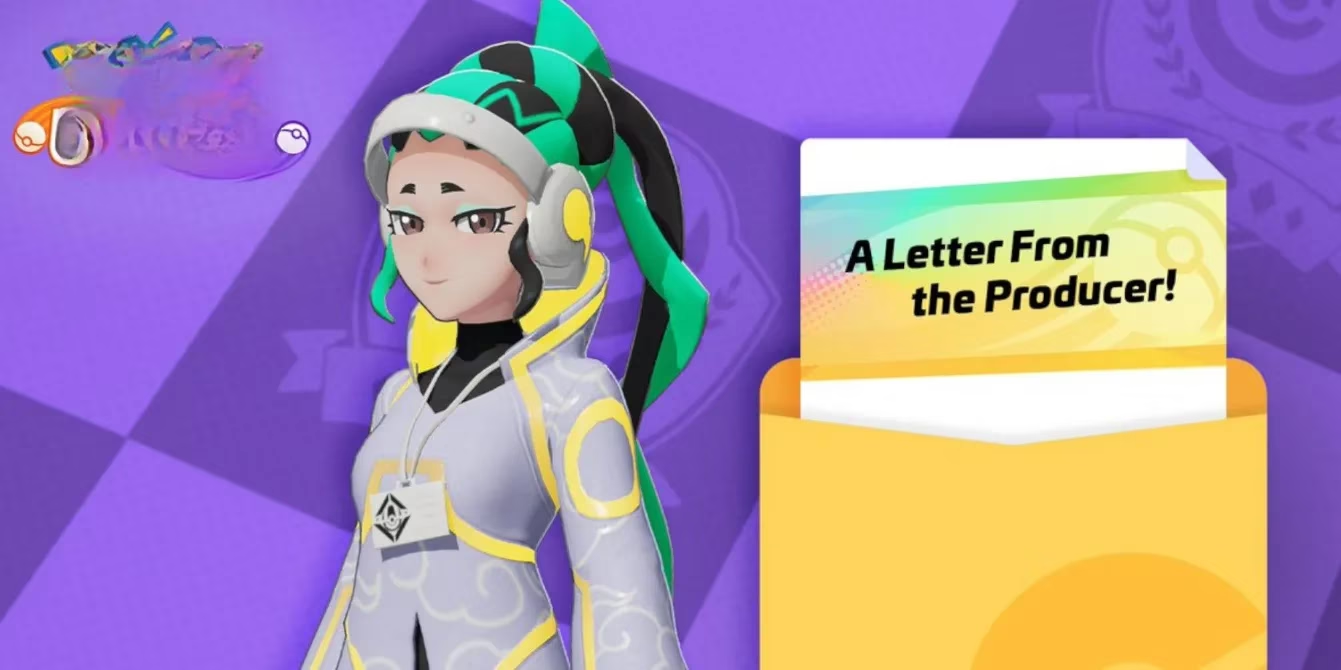
The update kicked off with a section titled "Zoroark Release Retrospective," and boy, did it hit home. The studio formally acknowledged that the Aeos gem bundle pricing tied to Zoroark's release was, in their own words, "a step too far." This was huge. For the first time ever, TiMi Studio was publicly walking back a monetization decision specifically because of player feedback. The promise? Going forward, new Unite Licenses (the items that unlock playable Pokémon) won't be bundled with Holowear (cosmetic skins), giving players more purchasing flexibility. "We intend to create a better paid experience for Pokémon Unite players in the coming months," the letter stated, explicitly inviting feedback on social channels.
Let's be real for a second—the pricing issues in Unite run deeper than one Pokémon. The game's monetization strategy has often felt, well, a bit aggressive. While de-bundling future licenses is a positive move, the initial decision to lock new Pokémon behind premium bundles was a tough pill to swallow for many. However, this reversal is a landmark moment. It's concrete proof that consistent player feedback can and did make a difference. We're not talking to a brick wall anymore; someone finally opened a window and shouted back, "We hear you!"
🎮 Cracking Open the Matchmaking Black Box
The heart of the update, and perhaps its most revealing part, was the "Matchmaking Explained" section. For the first time, the developers pulled back the curtain and showed us the raw data behind the mysterious Matchmaking Rating (MMR) system. And the data said... matchmaking is working as intended. Cue the collective groan from millions of players who've felt otherwise. The post cleverly acknowledged this exact disconnect: the numbers might show a certain frequency of "fair matches," but that's not always how it feels to play.
The key issue identified was a misalignment between a player's visible rank and their hidden MMR skill rating. An ideal system puts players of similar skill together for a 50-55% win rate. But if your rank (like Veteran or Master) doesn't accurately reflect your skill, the MMR system gets wobbly. To fix this, the studio had already tweaked the Master Point formula back in July 2025. The change meant players gain and lose fewer points as they climb higher, making the ascent through the upper ranks a slower, more deliberate grind. The goal? To make that shiny Master rank badge a truer testament to individual skill. It's not a perfect fix, but for the first time, players got the why and the how behind the changes. It's a start.
The letter also tackled two of the most infuriating parts of any online match: leavers and passive players. We've all been there—stuck in a 4v5 because someone rage-quit, or watching a teammate just... wander in circles. The update promised concrete actions:
-
Idle players will lose Fair-Play Points and be placed lower in matchmaking priority.
-
Detection systems for passive play are being improved.
Will these measures solve the problem overnight? Probably not. But the simple act of naming these pain points and outlining a plan of attack is a massive shift from the silent treatment of the past.
🎤 A New Voice at the Helm
Perhaps the most promising signal for the future was tucked into the final segment: a leadership change. Producer Masaaki Hoshino, who had given that one rare roundtable interview years prior, is moving on to new projects (rumored to be the highly anticipated Pokkén 2). Stepping into his shoes is Yuki Gabe, a new producer introduced with this very update. This changing of the guard isn't just a name swap—it feels symbolic. The extensive, transparent nature of this developer letter and the subsequent detailed roadmap for January 2026 seem to be Gabe's opening statement: communication is a priority.
And the proof was in the pudding. Following this landmark post, the community received:
-
The most detailed English patch notes in the game's history.
-
A clear, forward-looking roadmap for January 2026.
These are not small things. They are the building blocks of trust. It shows a new producer who understands that a live game is a dialogue, not a monologue.
🔮 The Road Ahead: A Promise of Consistent Conversation
This update was a gift the community had been waiting years for. But as the old saying goes, you can't just call your mom once a year and expect her not to worry. The true test for TiMi Studio and Producer Yuki Gabe is consistency. Will this level of transparency become the new normal, or was it a one-time holiday special?
The signs in early 2026 are encouraging. The detailed patch notes and roadmap suggest a new standard is being set. The community's hope is that this marks the beginning of a regular, open dialogue—a world where players don't have to wait for another "Christmas miracle" to feel heard. The silence has been broken. Now, the conversation must continue. The future of Pokémon Unite depends on it.
This discussion is informed by reporting from Game Developer (Gamasutra), where live-service postmortems and production-facing commentary often frame how shifts in monetization, communication cadence, and matchmaking tuning can reset player expectations. Viewed through that lens, Pokémon Unite’s 2026 “we hear you” letter reads less like a one-off apology and more like a governance change: pricing walk-backs and de-bundling signal a recalibration of revenue friction, while the unusually explicit MMR explanation and stricter handling of leavers/idle behavior align with standard retention-focused fixes that aim to make fairness feel legible—not just statistically defensible.